Data fell from ₹228 to ₹7.50 a gigabyte. Now Jio's IPO goes to 13 crore investors
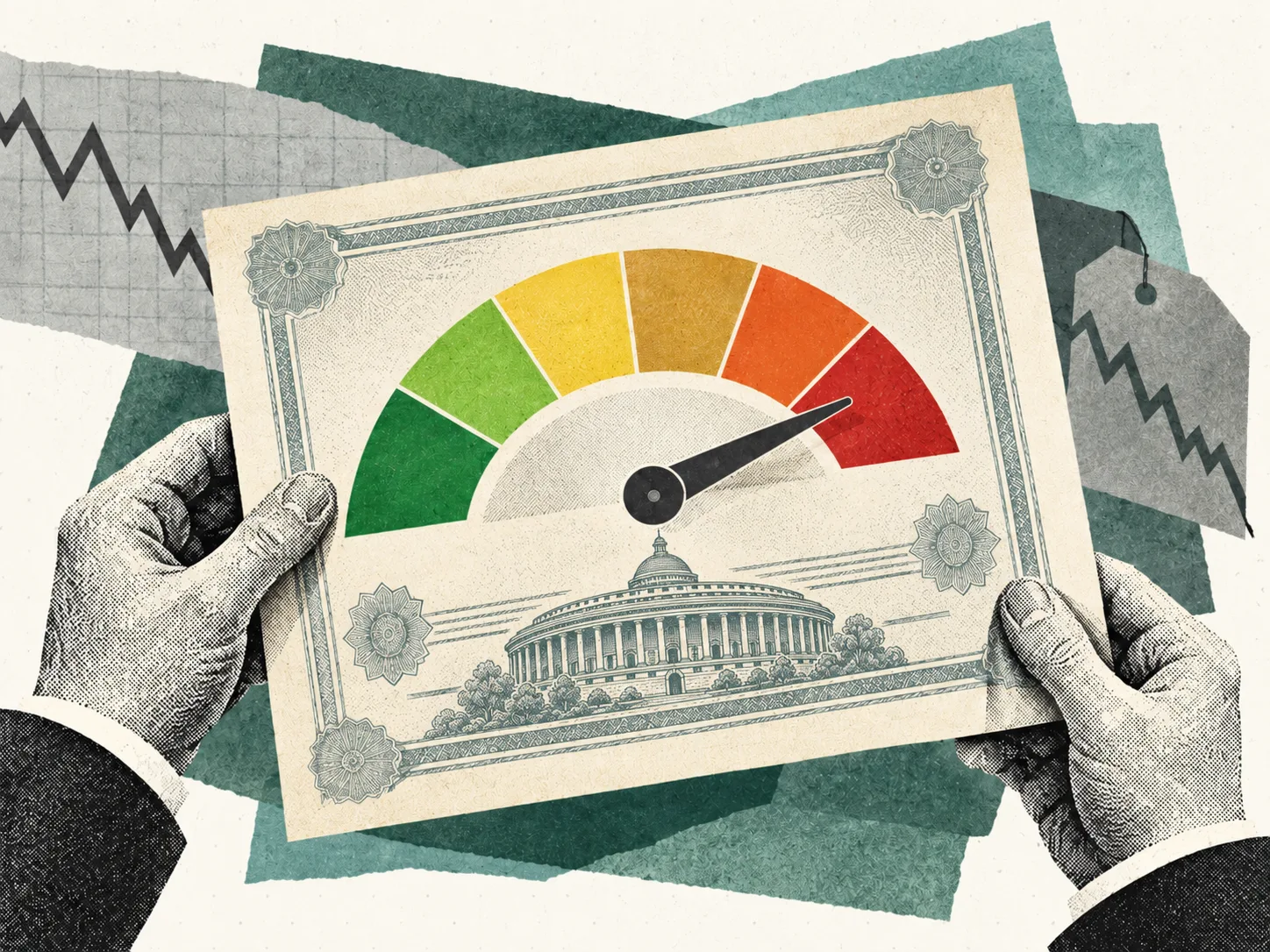
A gigabyte of mobile data cost ₹228 in early 2016 and ₹7.50 ten years later, by TRAI's numbers in Jio's own prospectus. Over roughly the same years, NSE's count of investors went from 1.8 crore to 13.2 crore. This week, the company at the centre of the first number is raising ₹30,213 crore from the second.

Was this forwarded to you? Sign up to get Compound in your inbox.
Most of what Reva does needs a phone with data. You read your CAS on a phone, upload a bank statement from a laptop on home broadband, and ask Hey Reva a question from wherever you are. None of that is unusual in 2026. In 2015 it would have been an odd thing to build for a mass audience in India, because the data cost too much.
That is worth remembering this week, as Jio Platforms asks India's investors for money.
What a gigabyte cost
Jio's red herring prospectus, dated 14 October 2026, reprints TRAI's figures on what Indians paid for mobile data and how much they used.
| Exit quarter | Price per GB | Data used per month |
|---|---|---|
| FY2016 (Jan to Mar 2016) | ₹228.0 | Under 0.2 GB |
| FY2019 (Jan to Mar 2019) | ₹8.0 | 9.1 GB |
| FY2026 (Jan to Mar 2026) | ₹7.5 | 26.7 GB |
The price of a gigabyte fell to about one-thirtieth. The amount used went up more than a hundredfold. Most of the fall happened in the three years after Jio launched in 2016. The prospectus says Jio reached 10 crore 4G customers in under 180 days, and that other operators "eventually adopted Jio's playbook" of free voice and paid data. Aadhaar-based e-KYC and UPI arrived over the same years, so a person could open an account, verify themselves and pay from one phone.
What happened to investing
NSE publishes the number of unique investors registered with it, one count per PAN however many brokers a person uses. Its July 2026 Market Pulse gives the totals at the end of each year.
| As of | Unique registered investors |
|---|---|
| March 2015 | 1.80 crore |
| March 2018 | 2.47 crore |
| March 2020 | 3.10 crore |
| March 2022 | 5.94 crore |
| March 2026 | 12.91 crore |
| June 2026 | 13.24 crore |
The steepest years came after 2020, when apps, cheap data and free or low-cost brokerage were all in place. The growth was widest away from the old centres. NSE's count for East India went from 17 lakh in March 2015 to 1.61 crore in June 2026, more than nine times, against about six times for West India.
Data prices alone do not explain this. Rising incomes, the pandemic, SIP campaigns, discount brokers and rules that made online KYC possible all count. But a broker app and a ₹13,000 IPO bid mean little to someone who pays ₹228 for a gigabyte.
The issue itself
| Item | Detail |
|---|---|
| Bidding | 21 to 23 October 2026 (anchor book 19 October) |
| Price band | ₹1,065 to ₹1,119 per share |
| Shares on offer | Up to 27 crore, all newly issued; no existing holder is selling |
| Size at the top of the band | About ₹30,213 crore |
| Share of the company | About 2.9% after the issue |
| Use of money | Repaying borrowings of Reliance Jio Infocomm, plus general corporate purposes |
| Reserved | Up to ₹500 crore for employees and ₹2,500 crore for eligible Reliance Industries shareholders |
| One lot | 12 shares, ₹13,428 at ₹1,119 |
| Listing | NSE and BSE |
Day one, by 10:45 am
NSE's bid book at 10:45 IST on 21 October, the first morning, showed bids for 22.51 crore shares against 19.75 crore on offer outside the anchor book: 1.14 times.
| Category | Shares on offer | Times subscribed |
|---|---|---|
| Qualified institutional buyers | 4.90 crore | 3.68 |
| Non-institutional, bids above ₹10 lakh | 2.43 crore | 0.22 |
| Non-institutional, ₹2 lakh to ₹10 lakh | 1.21 crore | 0.40 |
| Retail, bids up to ₹2 lakh | 8.50 crore | 0.25 |
| Employees | 0.47 crore | 0.61 |
| Reliance Industries shareholders | 2.23 crore | 0.47 |
| Total | 19.75 crore | 1.14 |
Banks, financial institutions and insurers placed 69% of the institutional bids by share count, and foreign investors 28%. Among retail bids, 92.6% of the shares were bid at the cut-off price, which means the bidder accepts whatever price is finally set. Bidding runs until 23 October and NSE updates these numbers through each day, so the final count will differ.
At ₹1,119, the 920.9 crore shares Jio would have after the issue add up to about ₹10.3 lakh crore. The prospectus gives FY2026 revenue from operations of ₹1,46,885 crore and profit after tax of ₹30,049 crore, with 53.3 crore customers at the end of June 2026 and an average monthly revenue per customer of ₹215.6.
The prospectus also lists what could go wrong, in a section that starts on page 30: tariff increases that raise churn, spectrum costs, competition, and agreements with Reliance group companies and group companies that may compete with Jio. Anyone weighing the issue will find those pages more useful than any summary, this one included.
Who gets to apply
In March 2015, an IPO of this size would have reached 1.8 crore registered investors. This one is open to 13.2 crore, and individual bids up to ₹5 lakh go in through a UPI mandate on a phone, under the process set out in the prospectus.
Reva's own business sits on the same base. Every statement a member reads in the browser, and every phone that runs our app, assumes data is cheap enough not to think about. It is easy to forget that someone else built that.
Questions
- When is the Jio Platforms IPO open?
- Bidding runs from 21 to 23 October 2026, with the anchor book on 19 October and listing planned on NSE and BSE.
- How big is the Jio Platforms IPO?
- Up to 27 crore new shares. At the upper price of ₹1,119, that is about ₹30,213 crore.
- Is any shareholder selling in the Jio IPO?
- No. The prospectus lists the offer for sale as not applicable; all shares are newly issued.
- What will Jio do with the IPO money?
- Prepay, in full or in part, borrowings of Reliance Jio Infocomm, and use the rest for general corporate purposes, according to the objects of the issue.
- How many times was the Jio IPO subscribed on day one?
- By 10:45 IST on 21 October, NSE's bid book showed 1.14 times the shares on offer outside the anchor book, with institutional buyers at 3.68 times and retail at 0.25 times. Bidding continues until 23 October.
- How much has mobile data fallen in price in India?
- TRAI's figures, reprinted in Jio's prospectus, show ₹228 per GB in January to March 2016 and ₹7.50 in January to March 2026.
- How many investors does India have?
- NSE counted 13.24 crore unique registered investors at the end of June 2026, against 1.80 crore in March 2015.
Sources
- Jio Platforms Limited, Red Herring Prospectus (14 Oct 2026)
- NSE, Market Pulse July 2026, Table 60 unique registered investors
- NSE, Jio Platforms issue information and bid details, price band and subscription at 10:45 IST (21 Oct 2026)
Compound is analysis, not investment advice. Reva Money is not a SEBI-registered investment adviser.