The fine for unlisted RSUs is ₹10 lakh. Until 31 December, the fix can be ₹1 lakh
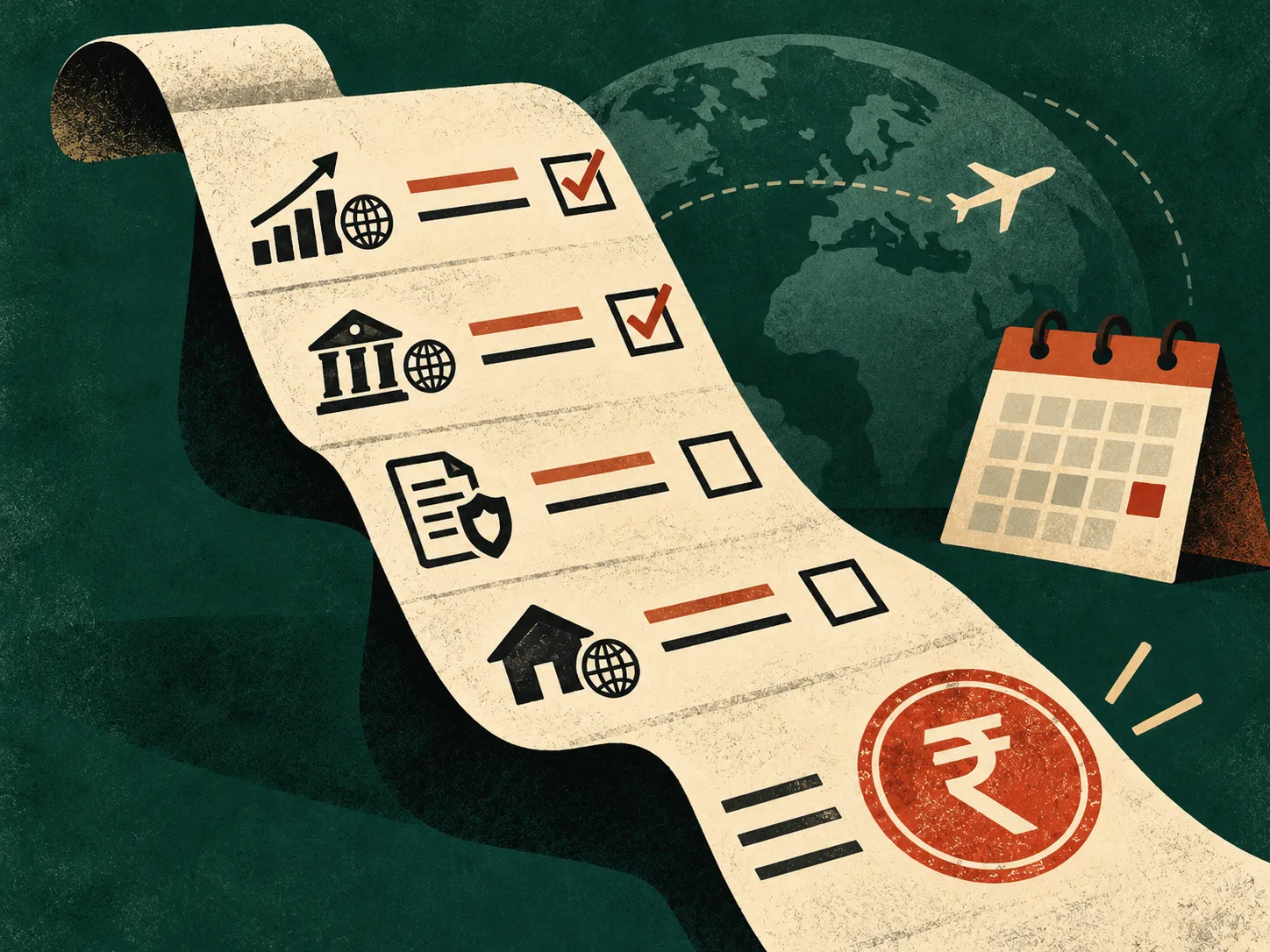
FAST-DS 2026 is a one-time window for foreign shares, accounts and income that never made it into Schedule FA. It closes on 31 December 2026. What you pay depends on whether the money behind the asset was taxed.
FAST-DS 2026 lets residents declare foreign assets and income left out of past returns until 31 December 2026. Assets bought from income already taxed in India, such as RSUs taxed as salary, cost a flat ₹1 lakh fee if they total ₹5 crore or less. Untaxed assets and income up to ₹1 crore pay 60% of their value.
Was this forwarded to you? Sign up to get Compound in your inbox.
FAST-DS 2026, the Foreign Assets of Small Taxpayers Disclosure Scheme, came into force on 16 August 2026. Declarations are filed online in Form 1. CBDT's rules set the last date as 31 December 2026.
The scheme is for foreign assets and income that were left out of past tax returns. The Budget memorandum names the usual cases:
- shares from foreign employers' ESOPs and RSUs
- old bank accounts from student years abroad
- savings and insurance policies of people who moved back to India
- assets bought while on an overseas posting
Why it matters at these amounts
Every resident must list foreign assets in Schedule FA, the foreign assets section of the income tax return. Leaving them out can draw a penalty of ₹10 lakh under the Black Money Act, whatever the asset is worth.
Since 1 October 2024, that penalty does not apply when foreign assets other than property total ₹20 lakh or less. A director holding ₹1.8 crore of US-listed RSUs is well above that line.
The scheme gives immunity from further tax, penalty and prosecution under the Black Money Act. The immunity covers FY 2025-26 and earlier years, for the assets and income declared.
Two rows, two prices
The Finance Act, 2026 sets out two kinds of declaration. Which one applies depends on where the money came from.
| Row 1 | Row 2 | |
|---|---|---|
| What it covers | Foreign assets with no explained source, and foreign income never taxed in India | Assets bought from income already taxed in India, or earned abroad while a non-resident, but missing from Schedule FA |
| Limit | Assets plus income up to ₹1 crore | Assets up to ₹5 crore |
| What you pay | 30% tax on the asset's value, 30% tax on the income, plus a penalty equal to that tax | A fee of ₹1 lakh |
| In effect | 60% of the amount declared | ₹1 lakh flat |
The rules set the cap for each row separately. Above ₹1 crore in row 1, or above ₹5 crore in row 2, that row cannot be used.
Two illustrations
RSUs taxed as salary. Say you received US-listed RSUs from 2021 to 2025. Each vest was taxed in India as salary through your employer's payroll. The shares never went into Schedule FA, and on 31 March 2026 they were worth ₹1.8 crore.
The shares were bought from income already taxed in India. That points to row 2 and a fee of ₹1 lakh.
Dividends or sale gains on those shares that were never reported count as undisclosed foreign income. Those fall under row 1.
An old student account. Say you left a US bank account open after studying there. The rules value a bank account at the sum of every deposit since it opened, not today's balance. Money withdrawn and paid back in is counted once.
Suppose that sum is ₹15 lakh, and ₹5 lakh of interest and dividends was never taxed. Row 1 applies:
- tax on the account: 30% of ₹15 lakh = ₹4.5 lakh
- tax on the income: 30% of ₹5 lakh = ₹1.5 lakh
- penalty equal to the tax: ₹6 lakh
- total: ₹12 lakh
These are illustrations. Which row a holding falls in depends on its history, and that needs a CA's view.
How the value is worked out
Every asset is valued as on 31 March 2026, the valuation date in the rules.
- Listed shares: the higher of what you paid and the average of the day's high and low price on 31 March 2026.
- Property, art and jewellery: the higher of cost and a valuation by a recognised valuer in that country.
- Foreign currency: converted to rupees at the RBI reference rate on 31 March 2026, through the US dollar for currencies RBI does not quote.
If an assessing officer later values an asset differently, the declaration still stands when the gap is 20% or less. This tolerance does not apply to bank accounts.
The dates after you file
You file Form 1 on the e-filing portal by 31 December 2026. The tax department then sends an order in Form 2 with the amount due, within a month after the end of the month you file.
You have two months from the end of the month the order arrives to pay. After that, two more months are allowed at 1% simple interest a month. Miss both and the declaration fails.
Take a declaration filed on 15 December 2026. The order is due by 31 January 2027. If it arrives in January, payment without interest is due by 31 March 2027, and the last day with interest is 31 May 2027.
Amounts paid under the scheme are not refunded. A declaration found to carry a false material fact becomes invalid.
Who cannot use it
- income or assets linked to money-laundering proceedings already started under the PMLA
- years for which a Black Money Act assessment is already complete
A person who is a non-resident today can still use it, if they were resident when the income arose or the asset was bought.
What is still open
The immunity stops at FY 2025-26. Returns for later years still need the same assets in Schedule FA.
The Finance Act leaves the last date to the government, and CBDT's rules fix it at 31 December 2026. A later date would need an amendment to those rules.
We post the charts behind these pieces on X (@revaprivate) and LinkedIn, and every new piece on our WhatsApp channel. Follow along to get them first.
Questions
- What is FAST-DS 2026?
- A one-time scheme under Chapter IV of the Finance Act, 2026 to declare foreign assets and income left out of past tax returns, with immunity under the Black Money Act. It opened on 16 August 2026 and closes on 31 December 2026.
- I paid tax on my RSUs as salary but never listed them in Schedule FA. What does the scheme charge?
- Assets bought from income already taxed in India pay a fee of ₹1 lakh, if their total value on 31 March 2026 is ₹5 crore or less.
- What does it cost to declare foreign income that was never taxed?
- 30% tax on the income and on any undisclosed asset's value, plus a penalty equal to that tax, so 60% in all. The total declared must not exceed ₹1 crore.
- How is a foreign bank account valued under FAST-DS?
- At the sum of all deposits since the account was opened, up to 31 March 2026. Deposits that come from earlier withdrawals are not counted again.
- When do I have to pay after declaring?
- Within two months from the end of the month the department's order arrives. Two more months are allowed with 1% simple interest a month.
- Can an NRI use FAST-DS 2026?
- Yes, if they were resident in India in the year the income arose or the asset was acquired.
Sources
- CBDT Notification 114/2026, Foreign Assets of Small Taxpayers Disclosure Scheme Rules, 2026 (14 Aug 2026), rules 2 to 8
- Finance Bill, 2026, clauses 114 to 128 (enacted as Chapter IV of the Finance Act, 2026)
- Memorandum explaining the provisions of the Finance Bill, 2026, FAST-DS 2026 (1 Feb 2026)
- Budget speech 2026-27, paragraphs 111 and 112 (1 Feb 2026)
- Memorandum explaining the provisions of the Finance (No. 2) Bill, 2024, Black Money Act sections 42 and 43 (23 Jul 2024)
Compound is analysis, not investment advice. Reva Money is not a SEBI-registered investment adviser.