Send money abroad to invest and the bank keeps 20% above ₹10 lakh. Here is how it comes back
TCS on money sent abroad under LRS: the rates from April 2026, what ₹25 lakh, ₹50 lakh and ₹1 crore cost at the bank, and how the money returns.
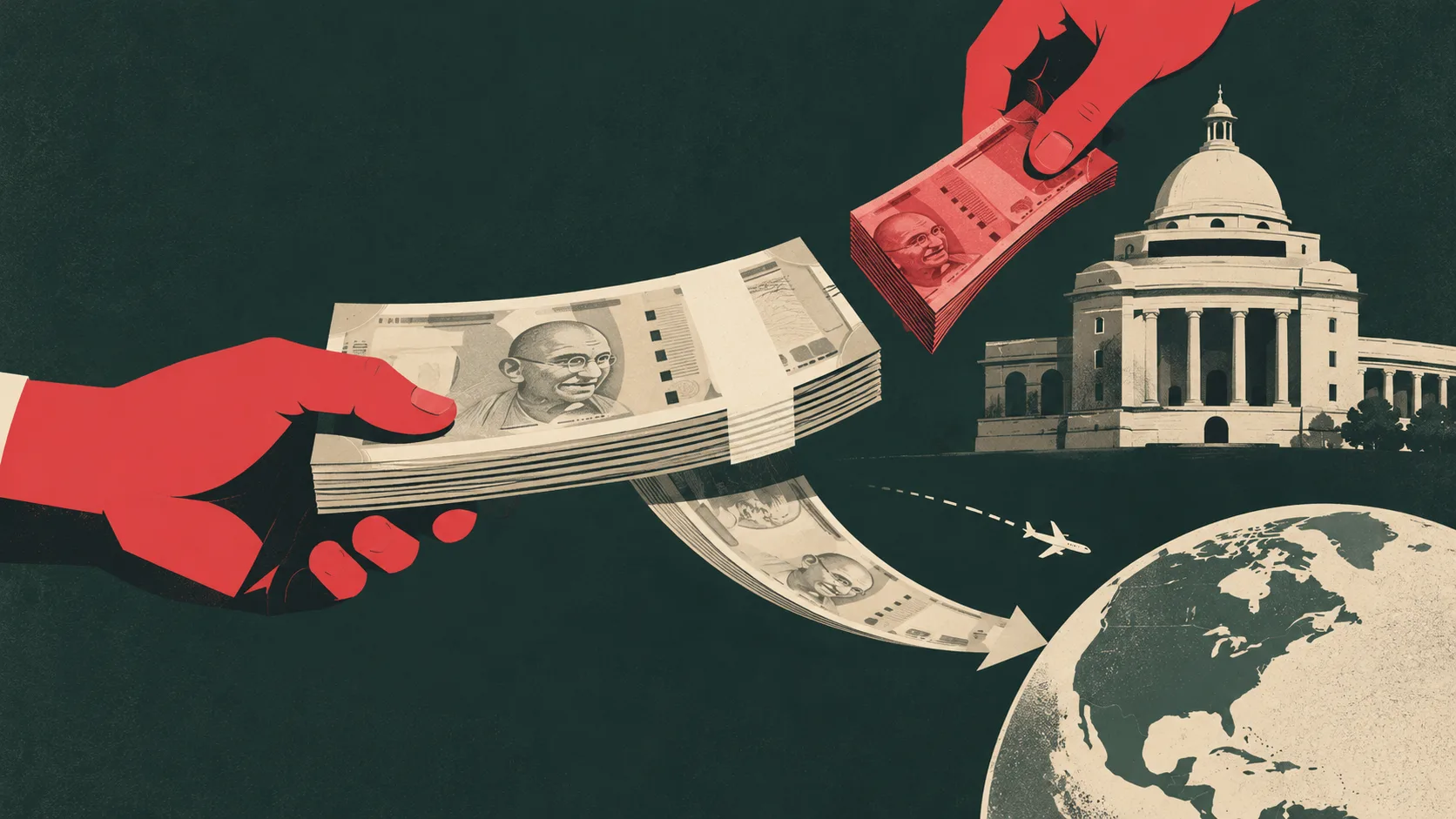
When a resident Indian sends more than ₹10 lakh abroad in a financial year to invest, the bank collects 20% of the excess as tax collected at source (TCS). From 1 April 2026 the rate on self-funded education and medical transfers is 2%, and education paid by a loan from a financial institution has none. TCS is not an extra tax: it shows in Form 26AS and counts against your income tax for the year, as lower tax due or a refund.
Was this forwarded to you? Sign up to get Compound in your inbox.
Resident Indians sent about $1.73 billion abroad to invest between April and August 2026, 2.1 times the same months of 2025, by RBI's monthly figures. We covered the numbers in Indians sent $1.4 billion abroad to invest in four months.
Every one of those transfers above ₹10 lakh a year came with a deduction at the bank. This piece explains what it is, how much it is, and how the money comes back.
What TCS is
Tax collected at source, or TCS, is tax your bank collects when you send money abroad under the Liberalised Remittance Scheme (LRS). LRS lets a resident individual send up to $250,000 abroad in a financial year.
The bank collects TCS on top of the amount you send and pays it to the government against your PAN.
It is not a separate tax. It is an advance payment of your own income tax for the year.
How much the bank holds back
The first ₹10 lakh you send in a financial year carries no TCS. The ₹10 lakh is counted across all your LRS transfers that year, whatever the purpose.
Above ₹10 lakh, the rate depends on the purpose. These rates apply from 1 April 2026.
| Purpose | TCS above ₹10 lakh |
|---|---|
| Education paid by a loan from a financial institution | Nil |
| Education or medical treatment, paid from your own money | 2% (5% until March 2026) |
| Investing, gifts, property, supporting relatives and everything else | 20% |
| Overseas tour packages | 2% from the first rupee, with no ₹10 lakh threshold |
For money sent abroad to invest, the arithmetic looks like this.
| Sent to invest in the year | TCS held back |
|---|---|
| ₹10 lakh | ₹0 |
| ₹25 lakh | ₹3 lakh |
| ₹50 lakh | ₹8 lakh |
| ₹1 crore | ₹18 lakh |
The ₹10 lakh threshold and the $250,000 limit apply to each person separately.
How it comes back
TCS collected against your PAN shows up in your Form 26AS and your Annual Information Statement.
When you file your return, the TCS counts as tax already paid. If your tax for the year is more than the TCS, you pay that much less. If it is less, the difference is refunded.
Salaried people have one more route. Since October 2024, under the Finance (No. 2) Act, 2024, an employee can tell the employer about TCS paid during the year, and the employer can count it when working out the tax taken from salary. Ask your payroll team whether they take the declaration.
Until then, the money is out of your hands. Send ₹50 lakh in April and the ₹8 lakh stays with the government until your salary deductions catch up or your return is processed after the year ends.
What to keep
- the TCS certificate your bank issues for the transfers
- the purpose you declared to the bank, since the rate depends on it
- your Form 26AS for the year, to check that every transfer shows up
What changed this year
The Finance Act, 2026 cut the rate for self-funded education and medical transfers from 5% to 2%. It did not change the 20% rate on money sent to invest, the ₹10 lakh threshold or the $250,000 limit.
Analysis, not investment advice. Check your own case with your CA.
We post the charts behind these pieces on X (@revaprivate) and LinkedIn. Follow along to get them first.
Questions
- Is TCS an extra tax on money sent abroad?
- No. It is an advance payment of your income tax for the year. It counts against your tax when you file, and any excess is refunded.
- Does the ₹10 lakh threshold apply to each transfer?
- No. It applies to all your LRS transfers in a financial year added together, across purposes.
- What is the TCS on money sent abroad to invest from April 2026?
- 20% of the amount above ₹10 lakh in the financial year.
- Is there TCS on education paid with a loan?
- No, if the loan is from a financial institution. Self-funded education carries 2% above ₹10 lakh from April 2026.
Sources
- RBI Bulletin, Liberalised Remittance Scheme tables
- RBI Master Direction on the Liberalised Remittance Scheme
- Income Tax Department, Form 26AS and AIS
- Finance Act, 2026 and Finance (No. 2) Act, 2024
Compound is analysis, not investment advice. Reva Money is not a SEBI-registered investment adviser.