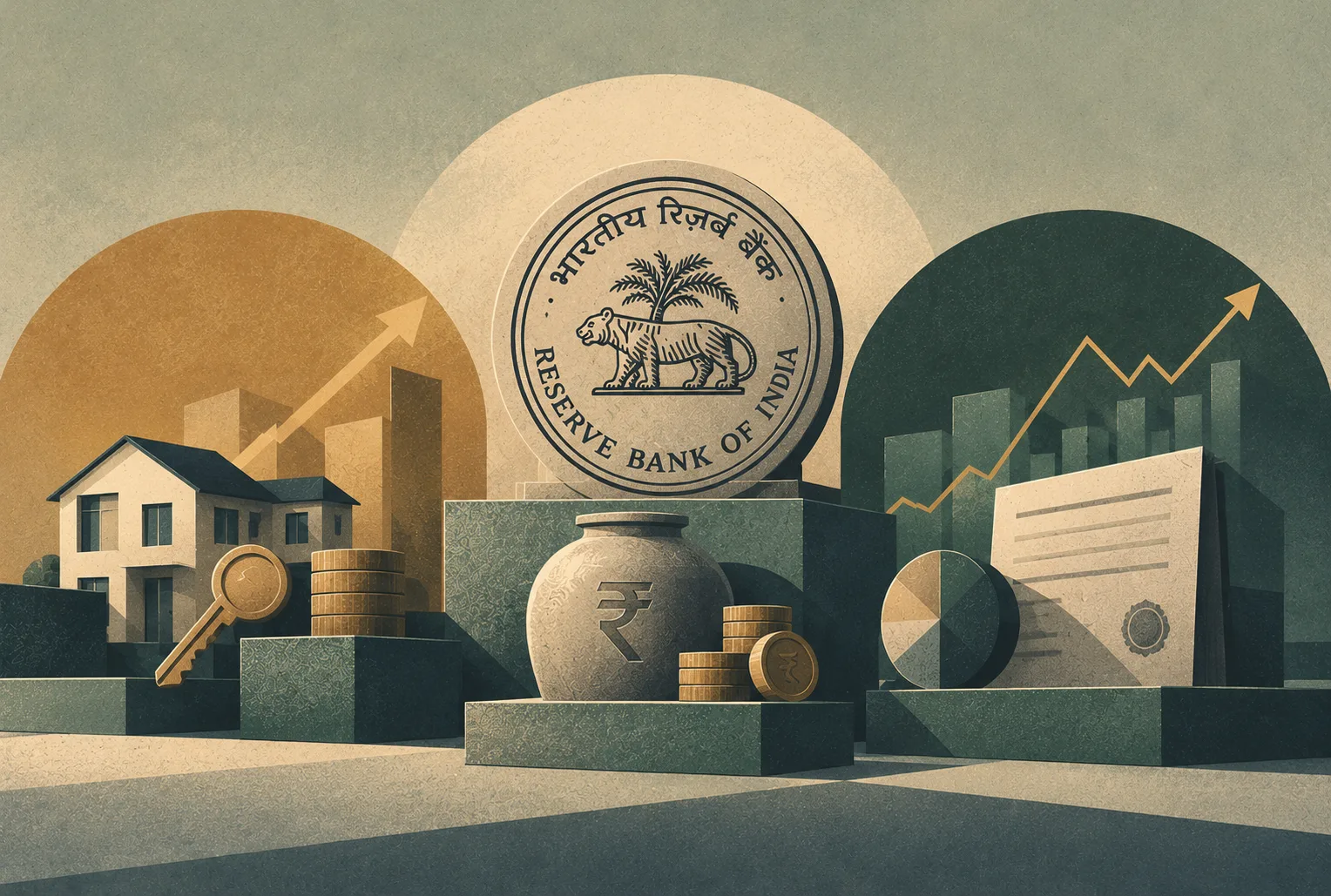
Budget 2026 left capital gains tax alone. Buybacks changed.
The rates you plan with this year are the ones set in July 2024. The one change that touches ordinary shareholders is how money from a buyback is taxed.
Was this forwarded to you? Sign up to get Compound in your inbox.
The Budget presented on 1 February 2026 kept the capital gains rates introduced on 23 July 2024. If you hold shares or equity mutual funds, the numbers for FY 2026-27 are the same as for FY 2025-26.
| What you sell | Held for | Tax |
|---|---|---|
| Listed shares, equity mutual funds | More than 12 months | 12.5% on gains above ₹1.25 lakh a year |
| Listed shares, equity mutual funds | 12 months or less | 20% |
| Debt mutual funds bought on or after 1 April 2023 | Any period | Your income tax slab |
| Property, physical gold, unlisted shares | More than 24 months | 12.5%, without indexation |
Rates are before surcharge and the 4% cess. For land or buildings bought before 23 July 2024, individuals and HUFs can still choose 20% with indexation if that works out lower.
What did change: buybacks
From 1 October 2024, when a company bought back your shares, the whole amount was taxed as dividend at your slab rate, and the cost of the shares was left to you as a capital loss. Budget 2026 moves buyback proceeds back to capital gains for every category of shareholder, so tax falls on the gain over your cost, at capital gains rates. Check the effective date in the Finance Act before you plan around a specific buyback.
A worked example
Say you sell equity funds in FY 2026-27 and make ₹3 lakh of long-term gains. The first ₹1.25 lakh is exempt, so ₹1.75 lakh is taxed at 12.5%: ₹21,875 before surcharge and cess.
The exemption resets every financial year and cannot be carried forward. Selling some units with long-term gains and buying them back within the same year uses up the exemption without changing what you hold; your cost goes up, so less is taxed later. Reva’s Insights page shows how much of this year’s ₹1.25 lakh you have left, from your actual lots.
Questions
- What is the LTCG tax on equity in FY 2026-27?
- 12.5% on long-term gains above ₹1.25 lakh a year from listed shares and equity mutual funds held over 12 months, before surcharge and cess.
- What is the STCG tax on equity in FY 2026-27?
- 20% on gains from listed shares and equity mutual funds held for 12 months or less.
- How are debt mutual funds taxed?
- Units bought on or after 1 April 2023 are taxed at your income tax slab, however long you hold them.
- What changed for share buybacks in Budget 2026?
- Buyback proceeds move back to capital gains for every category of shareholder, so tax falls on the gain over your cost instead of the whole amount being taxed as dividend. Check the effective date in the Finance Act.
Sources
- Angel One: Union Budget 2026, LTCG tax unchanged at 12.5%
- Tata Mutual Fund: Post-Budget 2026 tax map for equity investors
- Business Today: Capital gains tax and STT explained ahead of Budget 2026
Compound is analysis, not investment advice. Reva Money is not a SEBI-registered investment adviser.